Bottle-Feeding Rhinos in South Africa

Posted by: Boyd. M

Over two weeks in South Africa I saw a lot of wild animals, including a couple of lions.

Here’s how I ended up there. I’d been gallivanting around the world for a while, and I was getting into a bit of a rut, going to the main city of a country, doing the walking tours, the museums, the ruins, the churches, the castles. I decided it was time to do something different.

One day I was doom scrolling on Instagram and saw a video of someone bottle feeding a baby rhino. I watched. I clicked. I was hooked. The post was from GoEco, which places travelers in meaningful volunteer work all over the world. Next thing I knew, I was headed to South Africa to volunteer for two weeks at the Rhino Orphan Sanctuary, an organization that exists because of the ongoing problem of wild rhinos being killed by poachers for their horns.

Getting There

A short flight took me to Kruger Mpumalanga International Airport, where a driver met me. About an hour later we turned off the main road onto an unmarked dirt road and stopped at a gate manned by a young man in military fatigues, where our hands and feet were sanitized to avoid bringing anything into the sanctuary that might infect the animals. Then we bounced around narrow roads for another 45 minutes before reaching the area where I’d be staying.

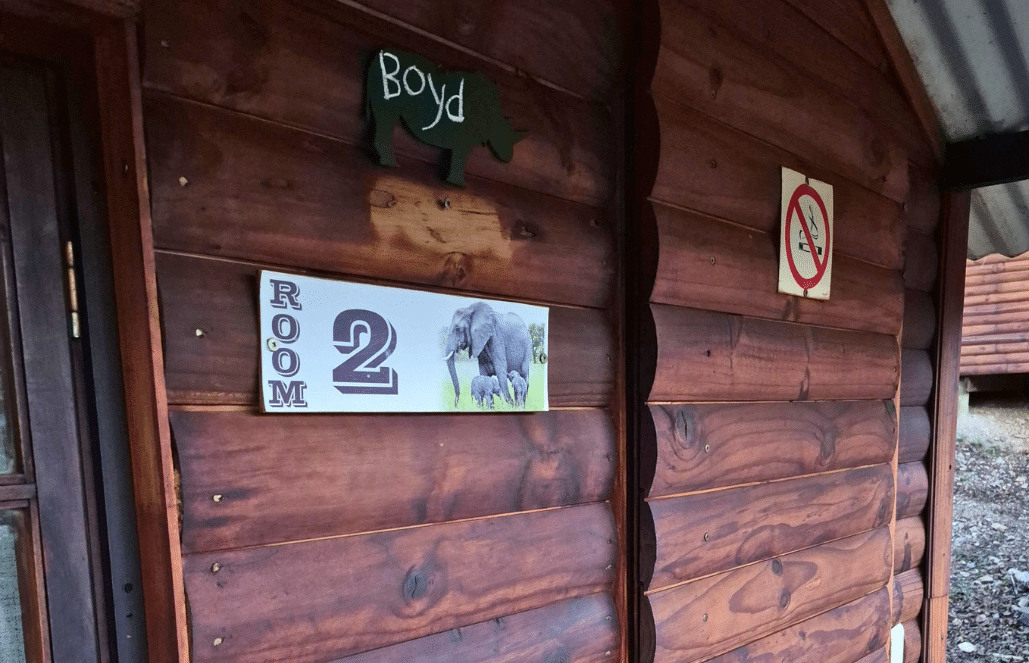
The place is literally and figuratively off the grid. The location is a guarded secret because of the illegal poaching that creates the need for it in the first place. All the electricity is solar-generated on site and the water comes from a nearby river. My cabin was rustic, no heat, no A/C, no insulation, so the outside temperature quickly became the inside temperature. It was winter, so the range of temps during my stay was low 40s to high 70s. Two weeks on an uncomfortable bunk bed — no bueno.

It gets dark around 5:30 p.m. and very quiet, except for the nearby lion roaring throughout the night and some nocturnal tree climbers landing on my roof several times each night.

Learning the Ropes

My first day of work started at 5:30 a.m. with a cup of instant coffee, then a brief meeting at 6:30 with the staff to discuss the day’s agenda. A five-star luxury resort, this is not.

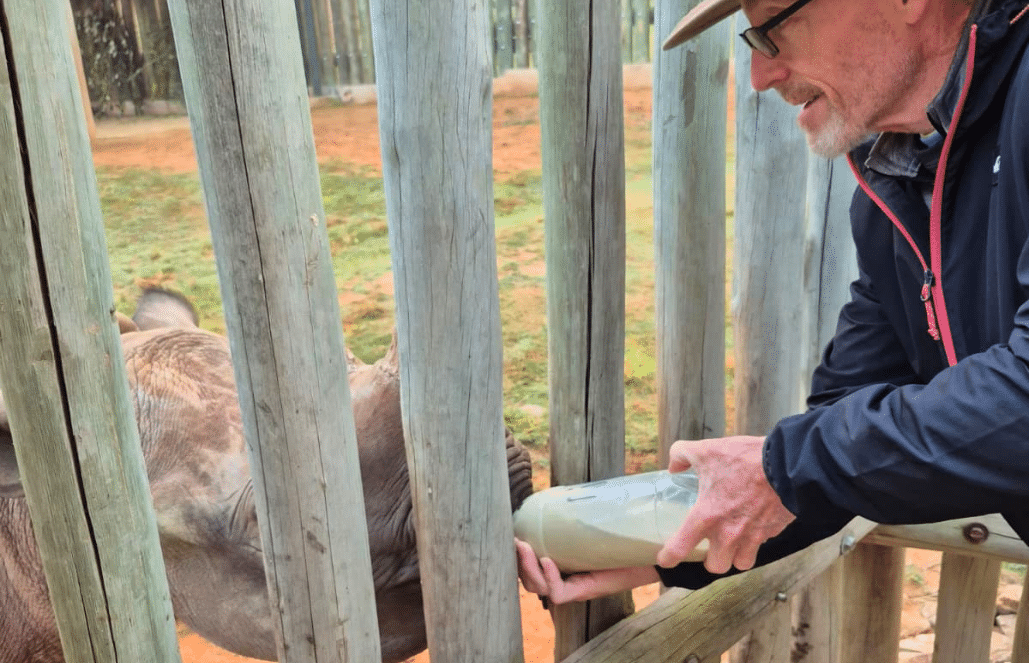
At the quarantine boma I learned how to mix rhino milk and what teff grass is, technical knowledge I’m sure will be invaluable to me going forward. Then came the first of a number of experiences of a lifetime: bottle feeding a rhino.

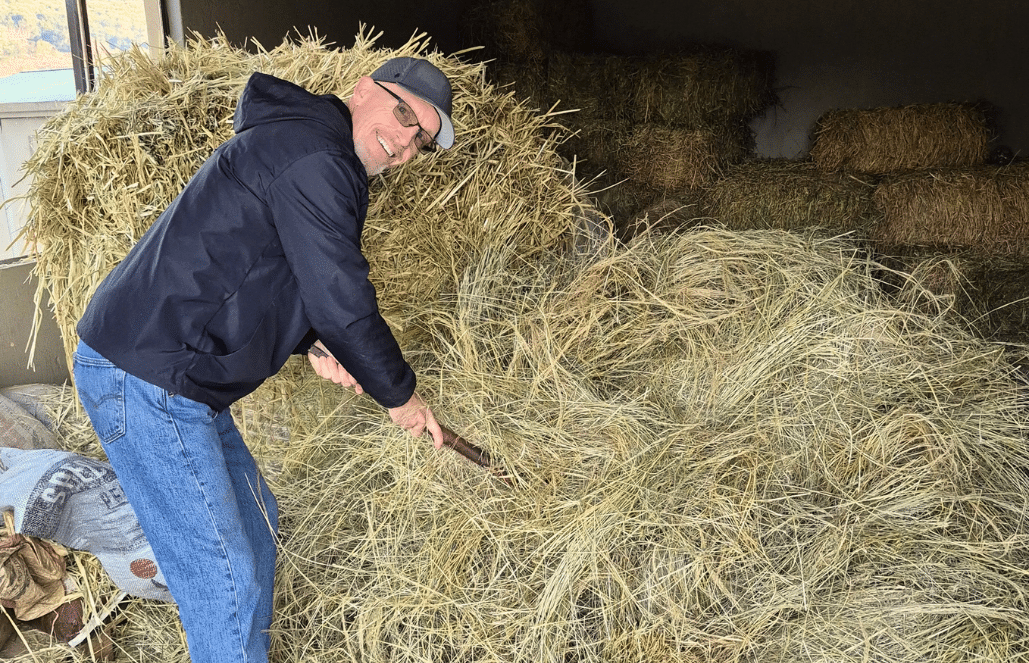
Later I shoveled teff grass and hand fed rhino pellets. Important lesson: white rhinos have no front teeth, so you can put your hand in their mouths and not lose any fingers. Black rhinos are a different story. A novice may not easily distinguish between the two. Luckily, I didn’t make that mistake, and ended the trip with all my digits intact.

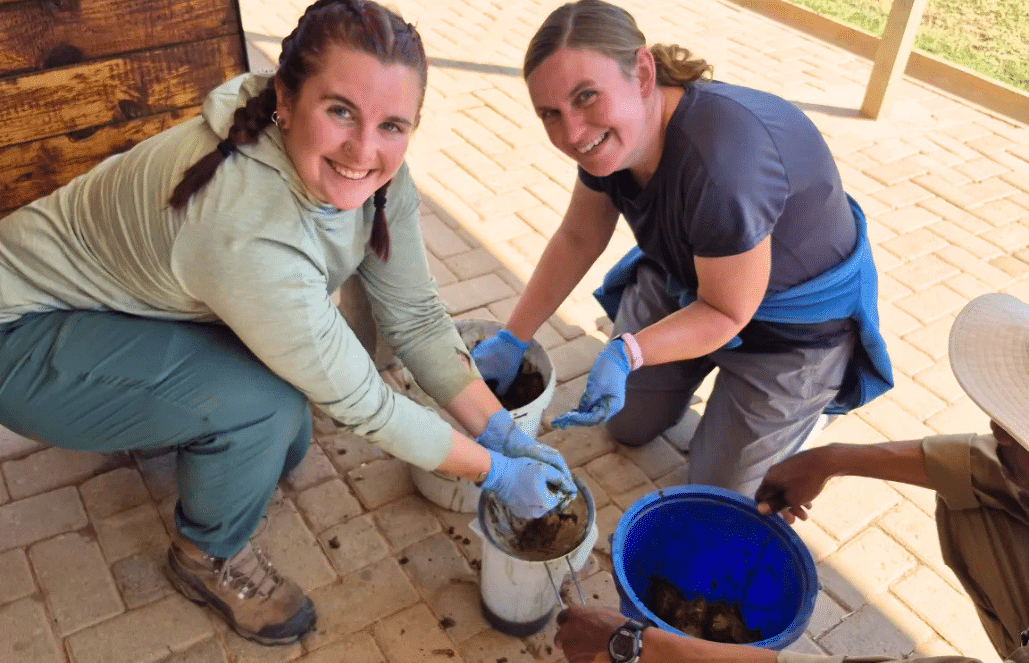
One of the more interesting things I learned was how to make a “shit shake.” In the wild, baby rhinos feed on their mother’s poop for several months before being weaned, to ingest bacteria from a healthy gut that helps them digest their food. Orphaned rhinos in quarantine get these bacteria from poop harvested from healthy mothers outside the quarantine, squeezed to release liquid that’s added to the prepared rhino milk mixture. Thankfully, I observed rather than participated in the poop squeezing.

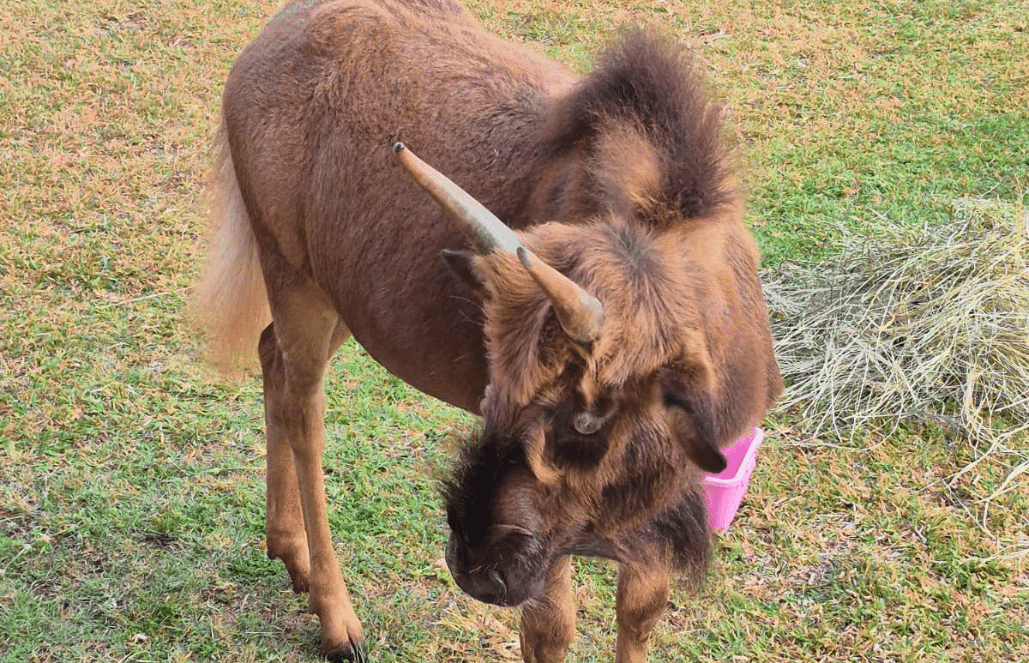
I started figuring out the routine: instant coffee between 6 and 6:30, meet with staff, to the boma by 7, a couple of hours of work, then breakfast, a few more hours of work, then lunch, then afternoon activities, everything from feeding Willem the wildebeest and Sally the goat (companion animals for some of the rhinos in quarantine) to a lecture on rhino nutrition that helped explain a lot of what I’d been doing in the bomas.

We typically rode out on the sanctuary grounds where the rest of the rhinos roam, for health checks and supplemental feeding of the nursing moms. It’s amazing to see these enormous animals up close.

Settling In

I got to know my fellow volunteers, or “vollies” as the staff called us, pretty well. It was like the United Nations, Amy from Australia, Mariela from Austria, Christine from Switzerland, Stephanie from Denmark, Amanda from the Washington DC area, Marijka from Cape Town, and Natalie from Utah. They all had interesting stories about how they’d ended up there and were all quite a bit younger than me.

I got my first taste of “cleaning the bomas” scooping rhino poop. It’s not as bad as you might think. It mainly smells like wet grass.

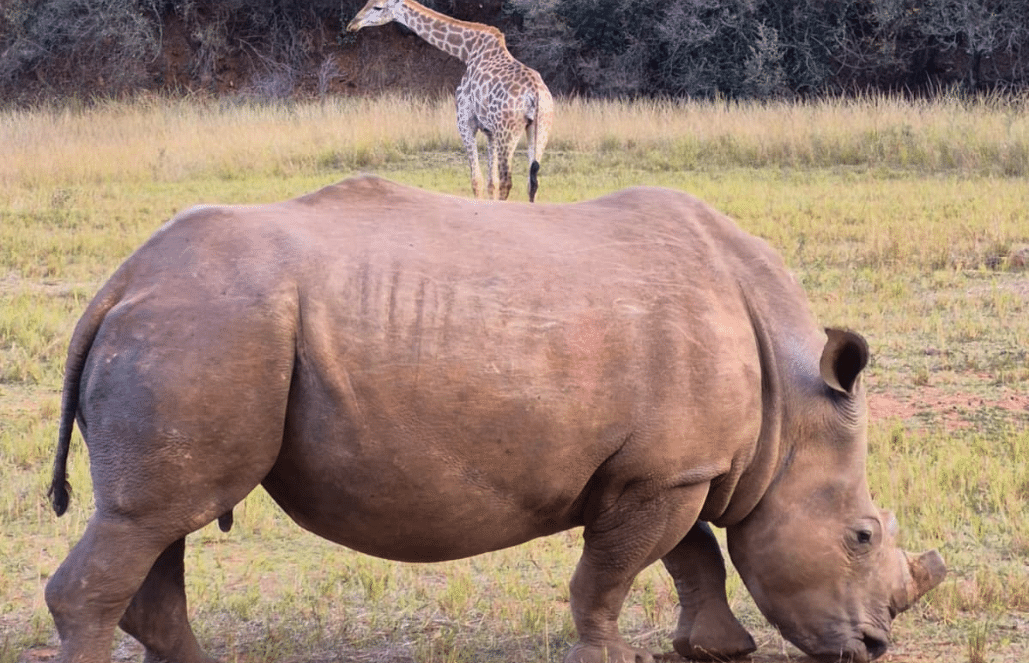
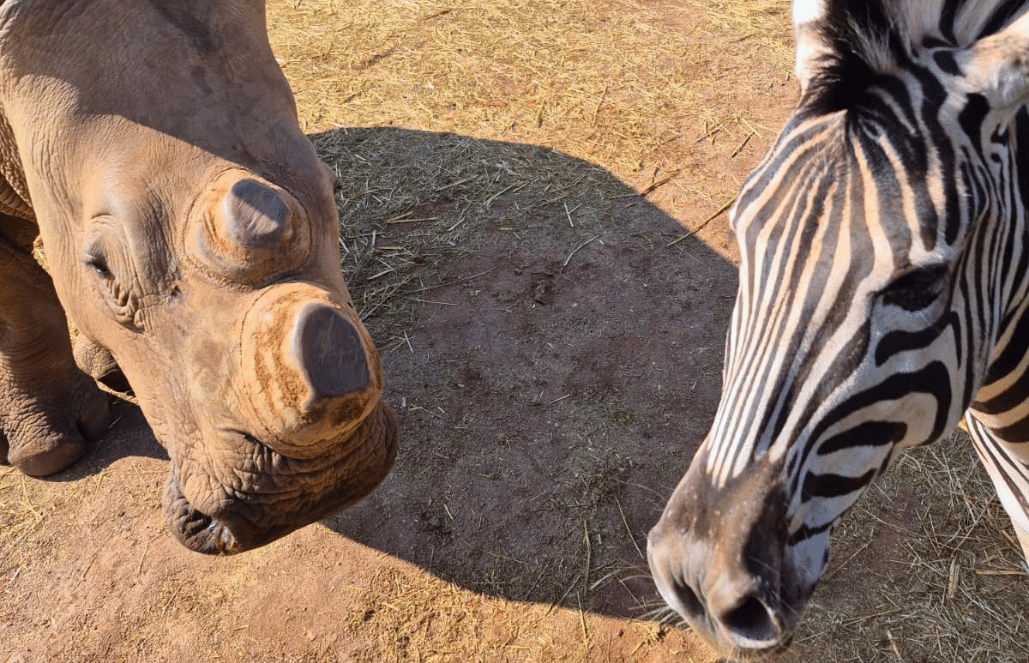
One afternoon we helped deliver cut up butternut squash as a treat to the rhinos outside the boma, with giraffes and zebras roaming the grounds as a bonus.

Weekends Off

The weekend brought a break from the boma cleaning and other chores, with two day trips arranged. The first was to Blyde River Canyon, a four hour drive including a coffee stop where our guide, Brandon, was bragging about how great coffee is in South Africa. He wasn’t wrong. We had a 90 minute boat ride with amazing views of the landscape and wildlife, including a long-tailed cormorant, crocodiles everywhere, and hippos.

The second trip was to Kruger National Park, with a 4:20 a.m. start to get there just after sunrise for the best chance of seeing certain animals. We were rewarded early with a rare sable antelope sighting, though it ran off before I got a picture. The highlight was watching a female lion with her two cubs stalking a herd of impalas for twenty or thirty minutes before we moved on, our guide said the lioness might wait patiently for hours before charging, or abandon the chase altogether. We weren’t that patient.

The Second Week

Week two started to feel a bit like Groundhog Day, but the staff mixed things up with different activities to break the monotony of food prep, poop scooping, and routine cleaning, taking inventory in the medical center, helping with outreach programs for local school children, and touring the operations center where the grounds are monitored 24/7 for animal movement and welfare, fence incursions from poachers, and water and electric supplies.

One day, out among the rhinos, one of the staff, named Ryno, funnily enough, approached an injured rhino on foot to apply ointment to a cut. The rhino was calm enough, but an aggressive male rammed it from behind, knocking it directly into Ryno. He was knocked down and almost stepped on. He could have been seriously injured, but thankfully avoided a catastrophe.

Evenings were quiet, but I found and finished two great books from the sanctuary’s lending library. I’d recommend The Elephant Whisperer and The Last Rhinos, both by Lawrence Anthony. One evening I played cribbage with a new vollie from Colorado who’d just finished her freshman year at university – an eighteen-year-old traveling South Africa on her own, which is pretty impressive.

We shoveled donated oranges at feeding spots around the sanctuary and rode along with Ryno as he attempted to dart a giraffe with an abscess to administer medicine. He missed and spooked the giraffe, so that had to wait for another day. There are two hippos kept at the sanctuary, and I got to help feed them too.

By my last weekend, most of the other volunteers had already left, so it was just me, Amanda, and our guide heading back to Kruger, another 5 a.m. departure, wrapped in three blankets and still shivering for nearly three hours. We got very close to a male lion and his companion, and everyone but me got a good look at a cheetah, apparently a genuinely rare sighting.

On the weekends we got to sleep in a little. It was a cold morning when I helped groom the horses the rangers use to patrol the grounds. After ten minutes of lovingly brushing a particularly disagreeable horse named Peggy, she wheeled around and bit me on the back as I walked away.

Wrapping Up

The highlight near the end was a demonstration by the resident dog handler, showing off the dogs’ obedience and drug-sniffing skills, trained, sadly, primarily for attacking and taking down poachers.

By my last day, I was ready to go, if I’m honest. The rustic accommodations and manual labor were a fun novelty for a while, but two weeks of it was a bit much. That night I watched a documentary called The Last Horns of Africa, which prominently features Petronel Nieuwoudt, who founded the sanctuary. She’s amazing, and I was glad I’d had the chance to meet her. The film is a deep dive into the rhino horn powder black market, if you have even the slightest interest in animal conservation, it’s worth watching, tissues at the ready.

Would I Do It Again?

Two weeks of shoveling teff grass, mixing milk formula, and getting bitten by a horse named Peggy isn’t everyone’s idea of a holiday. But I fed rhinos by hand, watched a lioness stalk her prey twenty-five yards away, made friends from six different countries, and came away actually understanding why places like the Rhino Orphan Sanctuary need volunteers in the first place.

If a video of a baby rhino has ever stopped your thumb mid-scroll, this is what happens if you don’t scroll past it. GoEco connects travelers with partnered organizations all over the world, sometimes the best trip is the one that doesn’t look anything like a normal holiday.